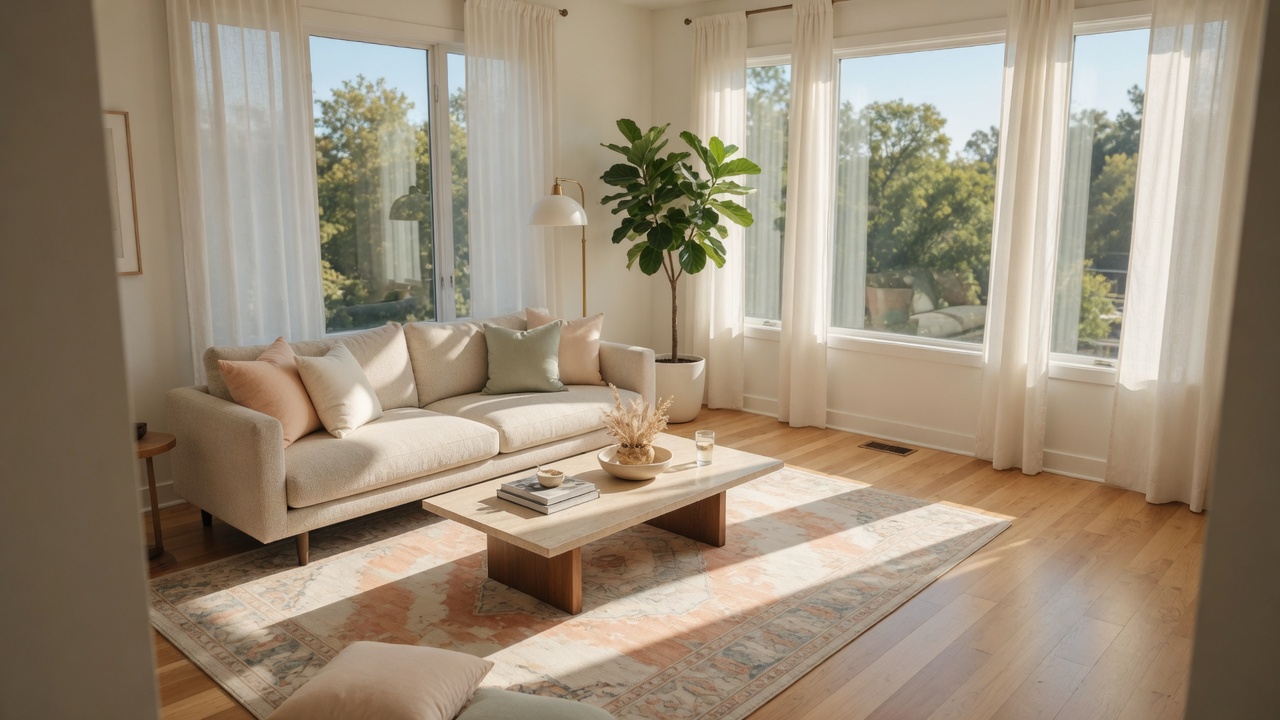
When done right, virtual staging helps buyers picture themselves in a home — without the cost or disruption of physically furnishing a property. It's become one of the most effective tools in real estate marketing, especially for homes that are tenant-occupied, vacant, or being listed before the seller has moved out. Here's why it matters and how it should be used responsibly.
What Virtual Staging Actually Does
Virtual staging is the process of digitally adding furniture, décor, and finishes to photos of an empty or occupied room. The goal is simple: help buyers see what a space could look like with the right furnishings, rather than asking them to imagine it on their own.
Research consistently shows that furnished photos generate more interest, more showings, and faster offers than empty rooms. A vacant living room can feel cold and difficult to scale — a virtually staged version gives buyers an immediate sense of proportion, flow, and livability.
It's a Tool, Not a Trick
One of the most common misconceptions about virtual staging is that it's used to mislead buyers. That's not how it should work — and at its best, it isn't. Virtual staging exists to show potential, not to deceive. When a buyer walks through the door, they need to find a home that matches what they saw online in every material way.
Think of it this way: a builder's rendering of a planned development isn't a lie — it's a vision. Virtual staging serves the same purpose. It bridges the gap between what a home is today and what it could be for the right buyer.
Transparency Is Non-Negotiable
Here's the rule that matters most: every virtually staged photo should be clearly disclosed. Buyers deserve to know upfront which elements in a photo are real and which have been added digitally. This isn't just best practice — it builds trust.
On our listing for 5 Rowanwood St, every photo comes with a clear disclosure. Buyers see the virtually staged images and know exactly what they're looking at before they schedule a showing. That transparency protects everyone — the seller, the agent, and most importantly, the buyer.
Our Disclosure Policy
All interior and exterior photos on this site have been virtually staged to show buyers the potential of the home — these items are not physically in the property. Virtual staging shows what the rooms could look like with modern furnishings and décor. We encourage you to arrange an in-person viewing to see the home's true condition and layout.
Never Alter What's Real
There's a clear line between staging a room and altering a property. Virtual staging should never change the dimensions, structure, or physical features of a home. No adding windows that don't exist. No making a room look larger than it is. No removing structural columns, bulkheads, or fixtures that are part of the property.
The best virtual staging highlights what's already there — the natural light, the flooring, the layout — and adds furnishing to help buyers understand the space. It's about amplifying a home's real qualities, not fabricating new ones.
Why It Matters for Tenant-Occupied and Vacant Homes
Not every home can be physically staged. When a property is still occupied by tenants — as 5 Rowanwood St was during its listing — physically staging every room isn't always practical or respectful of the current residents' space. Virtual staging solves this problem elegantly: the existing photos are enhanced digitally without requiring anyone to move a single piece of furniture.
For vacant homes, virtual staging eliminates the "empty room problem" that turns many buyers off. Studies from the National Association of Realtors and various MLS data sets suggest that staged homes — including virtually staged ones — sell faster and closer to asking price than their unstaged counterparts.
The Bottom Line
Virtual staging is one of the most cost-effective and impactful marketing tools available to sellers today. Used honestly and disclosed clearly, it helps buyers connect emotionally with a property, understand its potential, and feel confident in what they're seeing. It doesn't replace an in-person visit — it makes one more likely.
If you're curious about how virtual staging could work for your listing — or if you'd like to see 5 Rowanwood St in person — reach out to Tory for a conversation about what's possible.